Jelly Merge
Vira Games · Runner · 2024
Towers of hundreds of cubes that cost the same draw calls as one.
Frame rate read from an on-screen counter on the target device; drops traced with the Unity Profiler.
Context
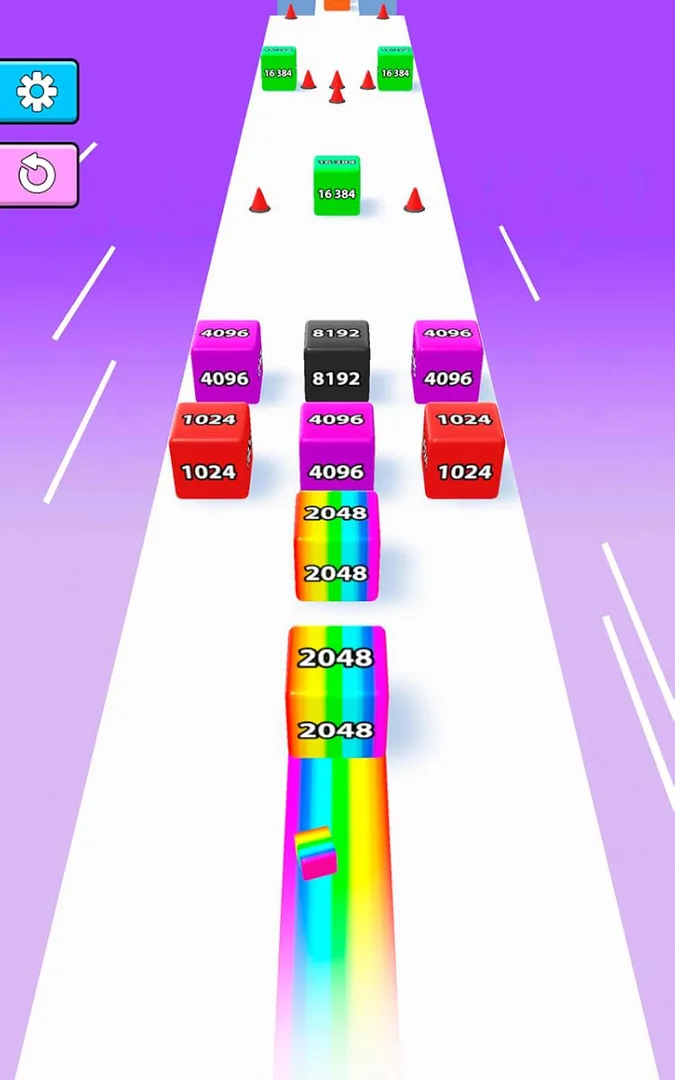
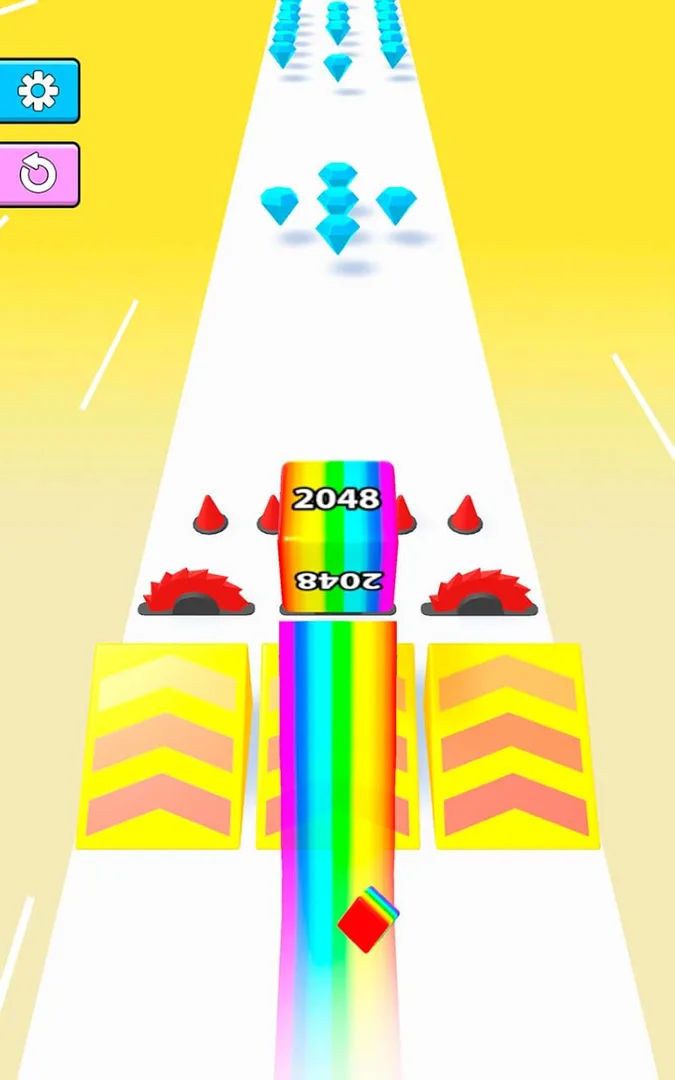
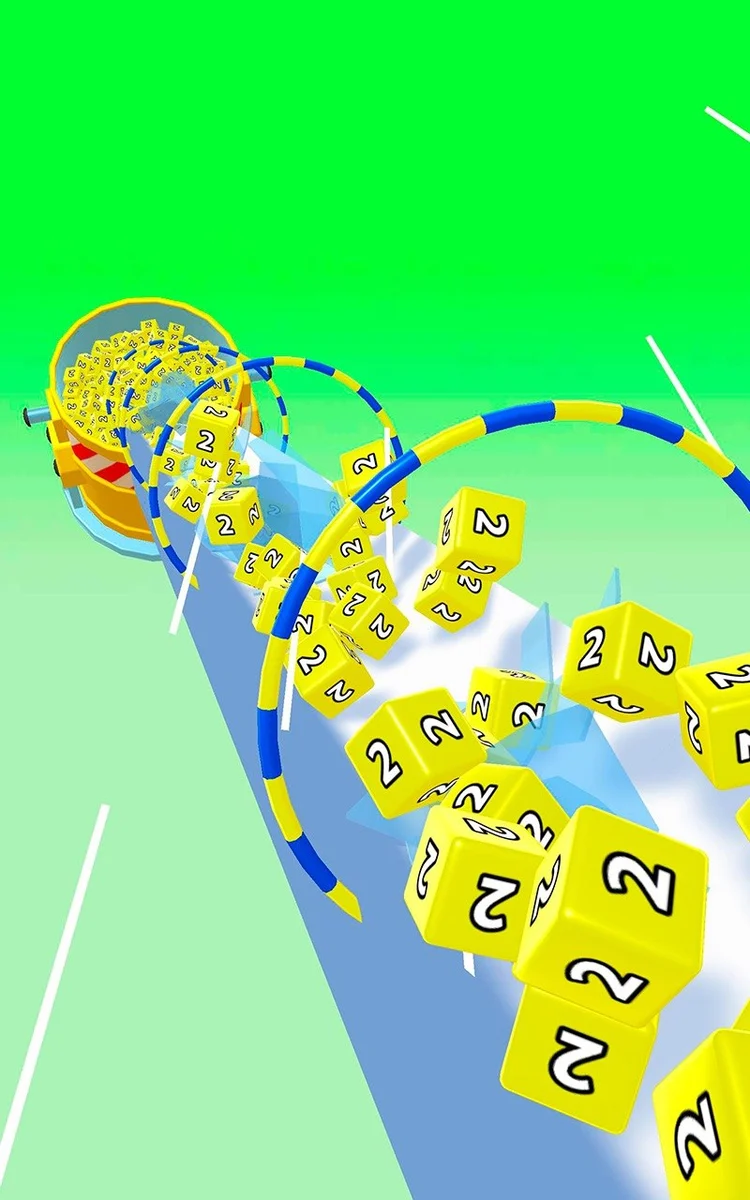
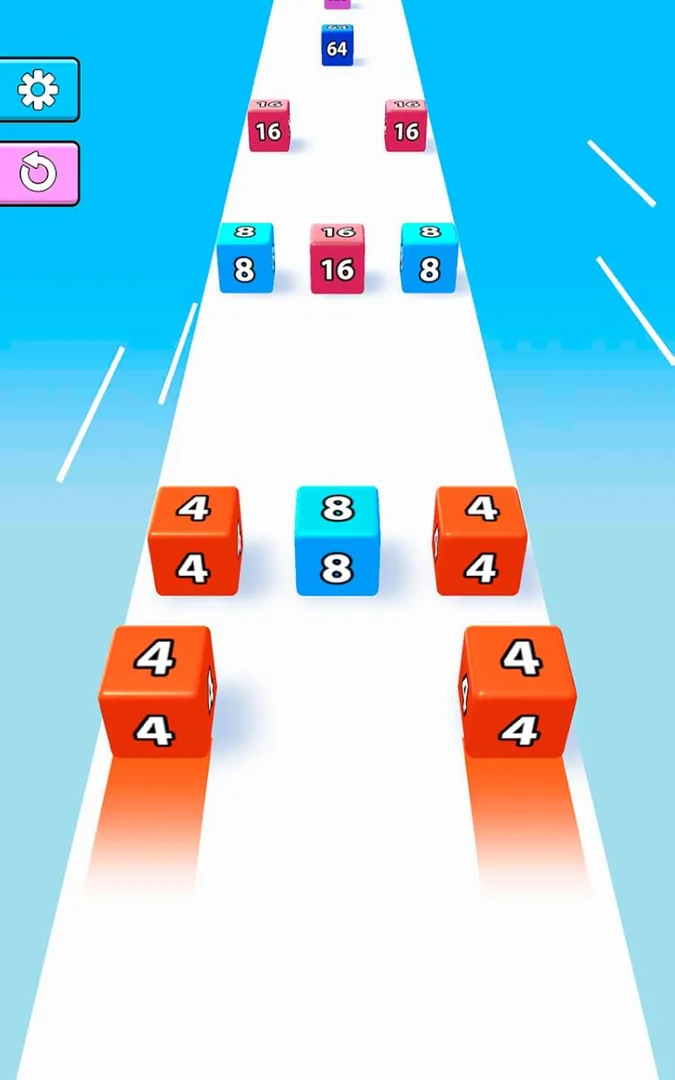
A runner built on one move: the cube you drive splits in two and merges back — the numbers on it halve and combine with it — and every obstacle is cleared by choosing the right state. The ending was ours, not a brief: the cubes ride a pipe down into a bucket, splitting through gates on the way. On top of the run sat a meta where you build figures out of hundreds of cubes.
I kept the physics on purpose — it was the entire feel of the run
Feel
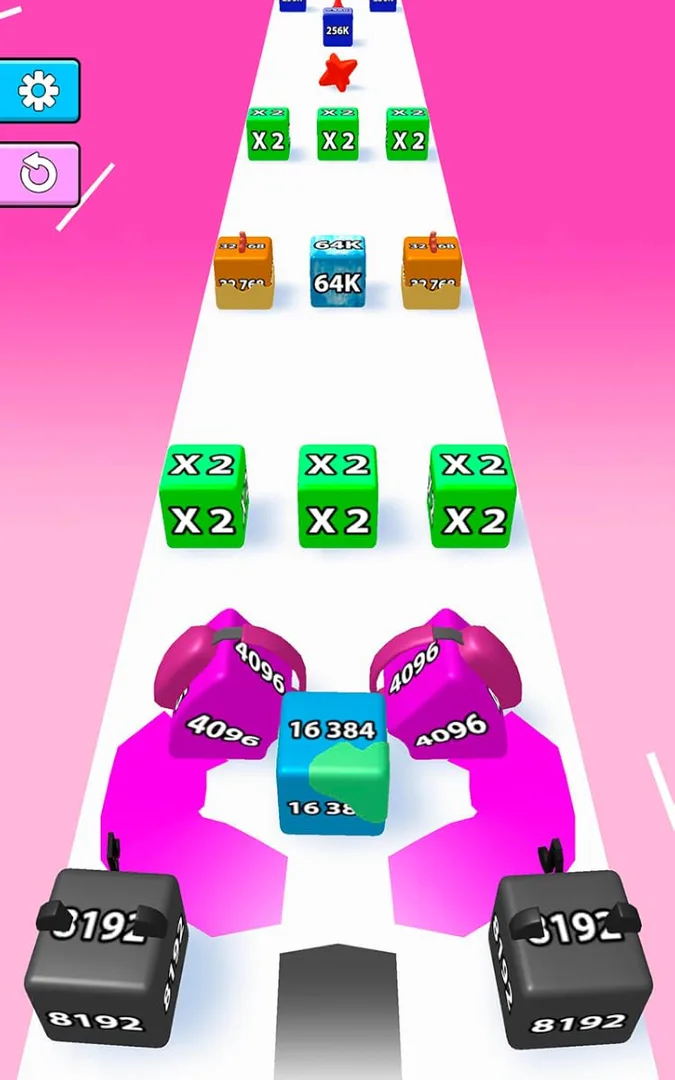
The run is one move: the cube splits in two and merges back, and the numbers on it split and combine with it.
With that little input, everything rests on how the cube feels, so I kept real physics for the movement instead of scripting it — the opposite call from the cutting game, for the opposite reason.
The split and merge animations had to look edible. The artist supplied a blendshape and I drove its value, then spent a long time on the tween parameters so one animation hands over to the next without a visible seam.
A tower of hundreds of cubes, baked down to the draw calls of one
The meta tool
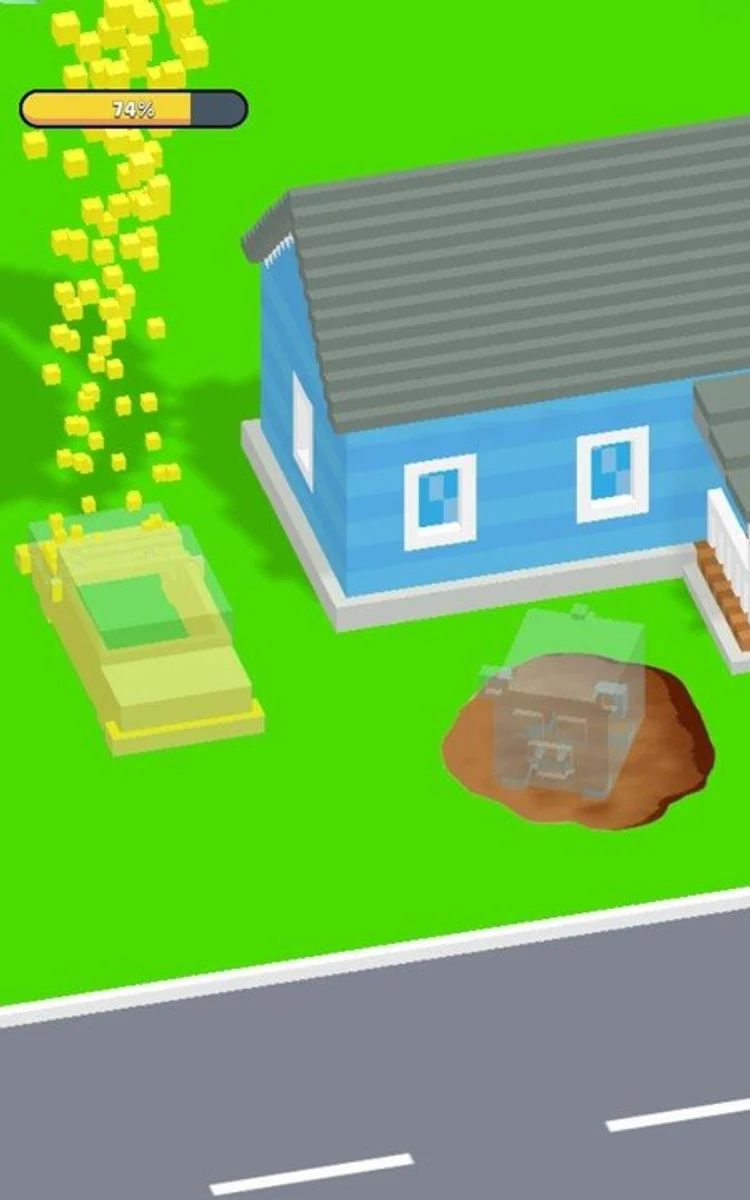
The meta builds figures out of hundreds of cubes, and models arrived already cut into thousands of them. Drawn one by one, a structure would cost as many draw calls as it had cubes.
My editor tool baked those cubes in chunks, bottom to top, using Mesh Baker. The result was handed back as a skinned mesh rather than a plain one, so an individual cube inside a baked model stayed a controllable object — baking usually takes that control away.
At runtime the object holds a transparent blueprint before construction, loads one floor, collapses the finished floor into a single boneless model, then loads the next.
The cost was honest and immediate: one model now produced a lot of meshes and prefabs. I paid for it with Addressables, loading the parts on demand instead of shipping them all.
Worth calling out
I built this one end to end — gameplay, menus, progression, shop, skins, tutorial, ads and store builds. These are the parts worth naming.
- The run
- Split and merge as the only input, with physics kept deliberately for the feel.
- Sphere overlap in place of collision callbacks in the core loop.
- A finish the team invented rather than received: the cubes ride a pipe into a bucket, splitting through gates on the way down.
- The meta
- The editor tool that turns a raw designer model into a game object in about five minutes.
- Chunked baking to a skinned mesh, so draw calls stopped scaling with the size of a structure.
- Cached and grouped tweens for the falling cubes, so construction reads fast without eating the frame.
- Addressables to hold the build size down once the tool multiplied the meshes.
- A Sims-style level editor: objects, cubes and obstacles placed by clicking directly in the scene.
More from the game
Project facts
- Year
- 2024
- Role
- Unity Developer
- Team
- Three-person pod — game designer, artist, me
- Scope
- Solo developer, concept to release
- Studio
- Vira Games
- Released as
- VG Interactive
- Engine
- Unity, C#
- Platform
- Android · Google Play and Amazon Appstore
- Target device
- Amazon Fire 7 · 1 GB RAM
- Measured
- Release build on the target tablet, on-screen counter
- Baking
- About a thousand cubes per structure, baked in chunks of roughly 200
- Before the tool
- No one had integrated a model like this — the meta was not feasible without it
- Level editor
- A Sims-style in-scene editor — the designer placed cubes and obstacles by clicking
- Where to see it
- Amazon Appstore ↗ · listed as Jelly Merge