
Soap Slice
Vira Games · Simulation · 2025
The scatter is scripted, not simulated.
Context
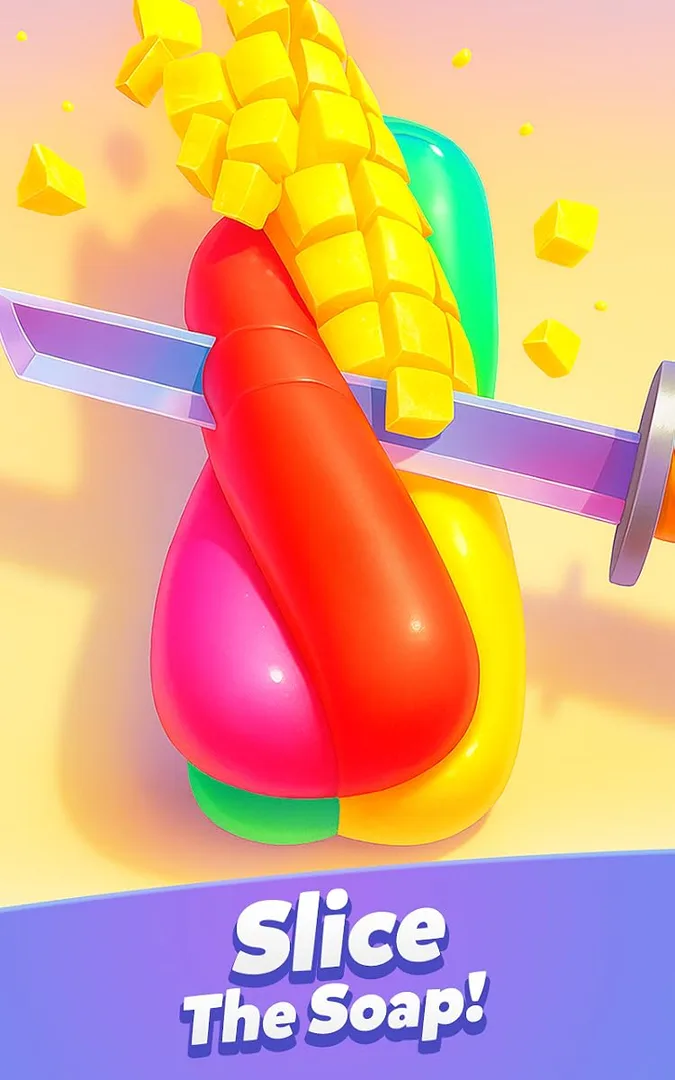
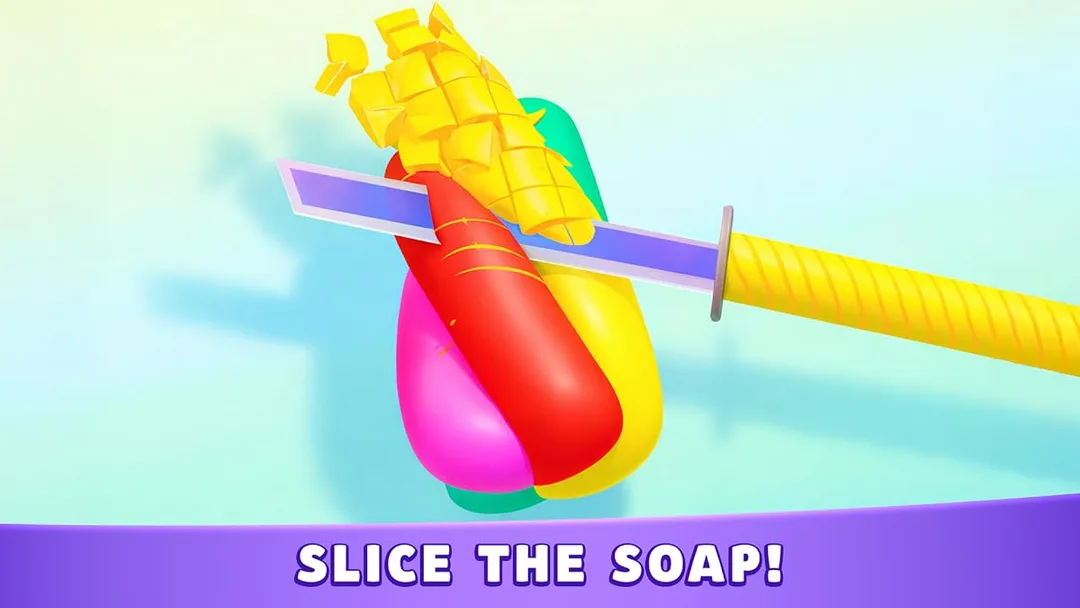
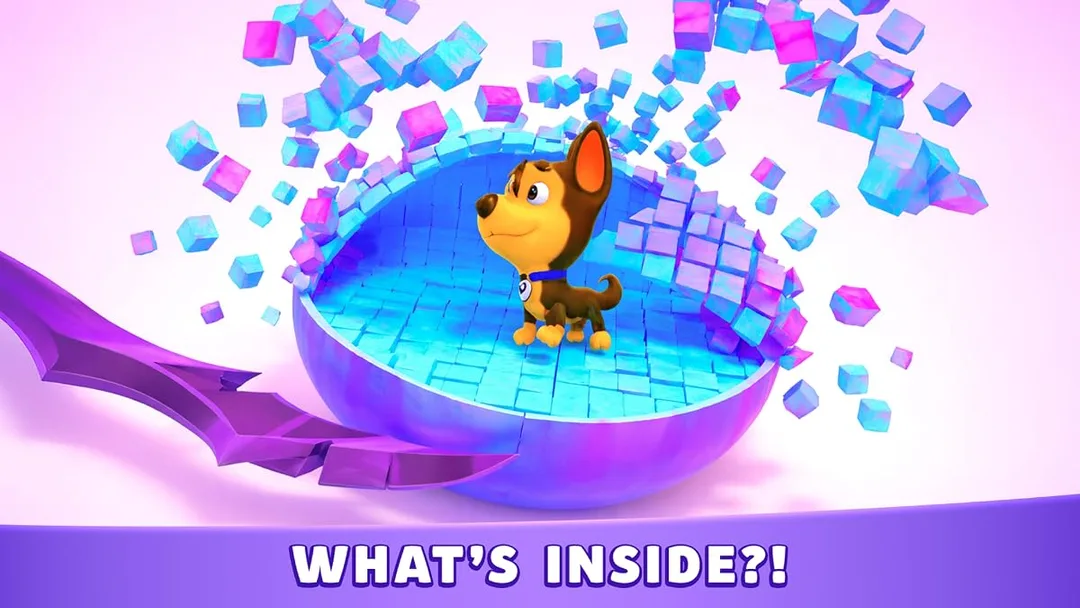
A cutting game: you slice a bar of soap and the pieces scatter. The producer had a precise reference for how that scatter should behave, and the inside of the bar carries a different texture from the outside.
The hard part was not the scatter — it was making a cut read as a cut
The cut

The hardest part was not the scatter but the cut itself. The whole team spent a long time on how sliced soap should read on screen.
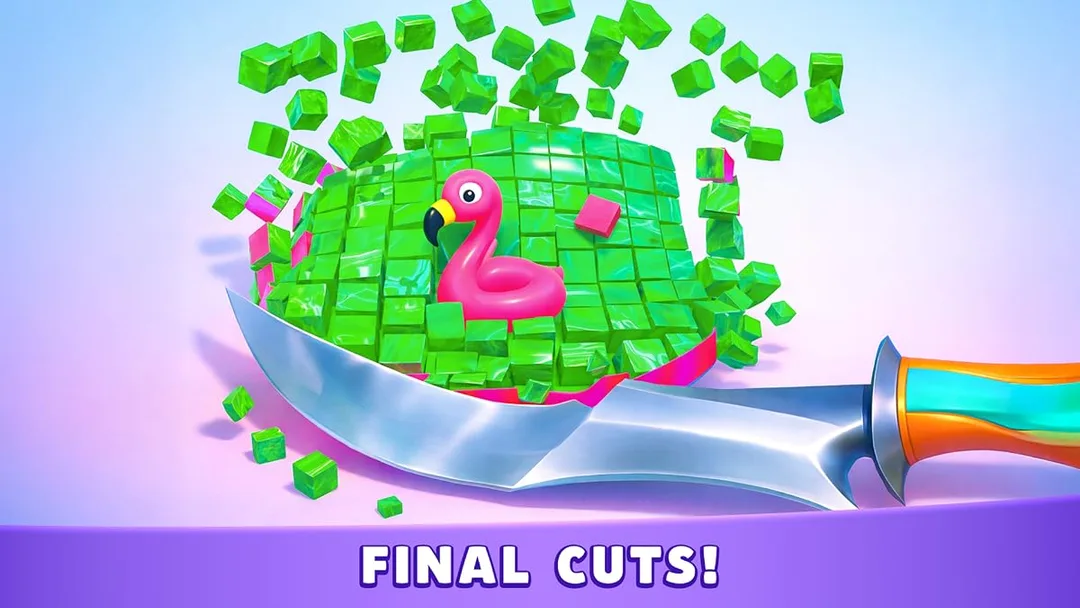
Three demands pulled against each other. The inner texture had to hold together: dozens of small cubes had to look like one continuous picture, not a mosaic. The geometry had to stay clean, with cubes even and roughly equal in size. And the number of cubes had to stay inside the frame budget.
Tuning the cutting algorithm was really the search for the point where all three agree. It was a negotiation between art, geometry and the frame, not an optimisation pass.
The knife slipped straight through the pieces
The scatter
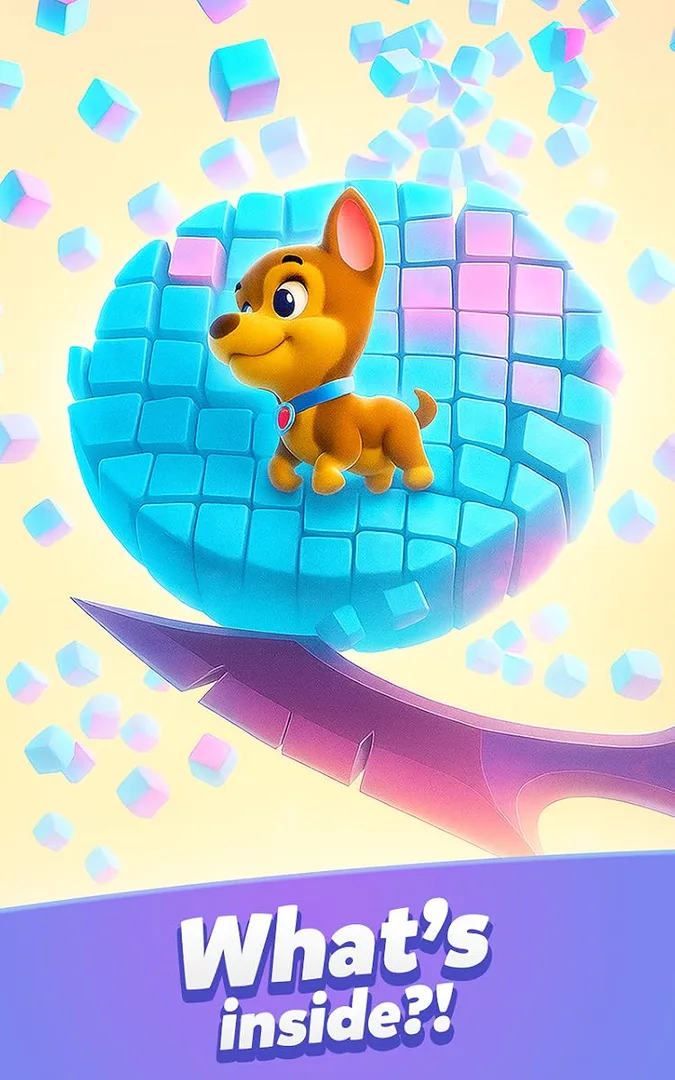
Real PhysX gave an unpredictable scatter and a poor feel, and a fast knife let pieces slip straight through the blade because the collision was never detected.
I replaced the scatter with a scripted impulse that decays, aimed from where the piece sat on the bar, which put the feel fully under control and on the producer reference.
The knife-to-piece collision became plain maths instead of a collider, which removed the tunnelling without touching the fixed timestep.
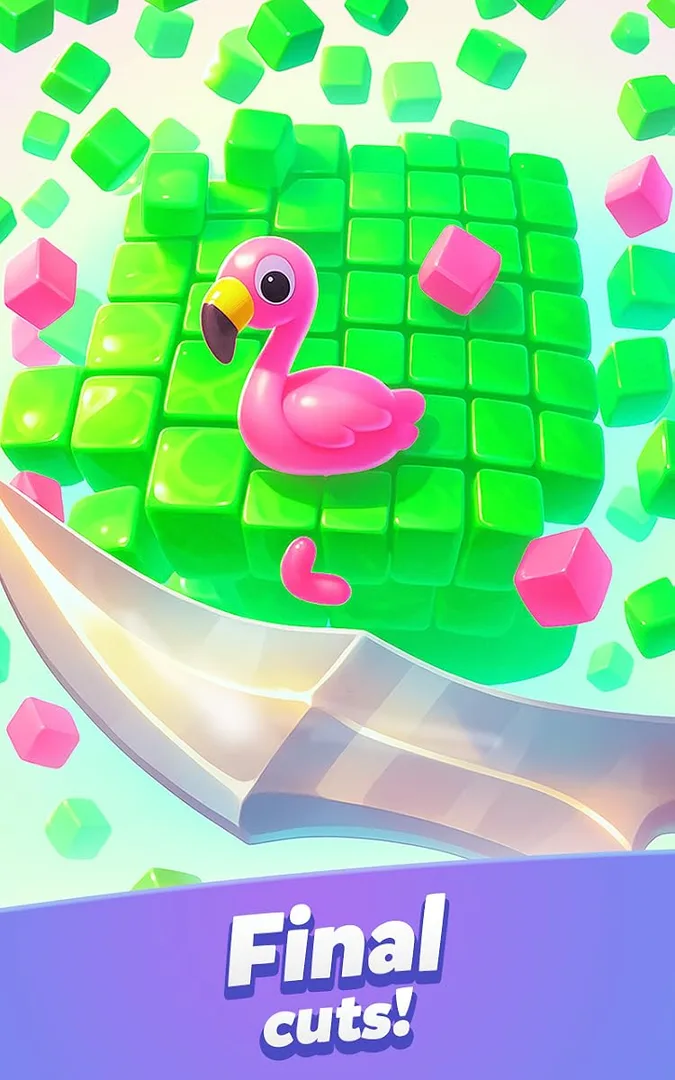
On the last layer a large heap of pieces still cost frames, so I tuned the decay until pieces fall asleep almost immediately and switch to kinematic while idle, so a newly arriving piece does not wake the whole pile.
Worth calling out
I built this one end to end — gameplay, menus, progression, shop, skins, tutorial, ads and store builds. These are the parts worth naming.
- The cut
- An editor tool that slices a designer mesh into cubes, so the game designer could re-cut a bar as many times as they wanted without a programmer.
- The cutting parameters that hold the inner texture together while keeping the piece count affordable.
- The feel
- Scripted scatter tuned against the producer reference, replacing engine physics.
- Knife-to-piece contact resolved mathematically, so a fast swipe never slips through.
- A decay-to-idle-to-kinematic path that keeps a full heap of pieces cheap.
More from the game

Project facts
- Year
- 2025
- Role
- Unity Developer
- Team
- Three-person pod — game designer, artist, me
- Scope
- Solo developer, concept to release
- Studio
- Vira Games
- Engine
- Unity, C#
- Platform
- Android · Google Play and Amazon Appstore
- Target device
- Amazon Fire 7 · 1 GB RAM
- Cut
- Cut ahead of play — the runtime slicer runs in a separate editor scene, about 600 pieces per bar
- Where to see it
- Amazon Appstore ↗