
Memory Foyer
Personal project · Tool · 2026
The one repository you can actually open — and the server, not the app, owns the truth.
Context
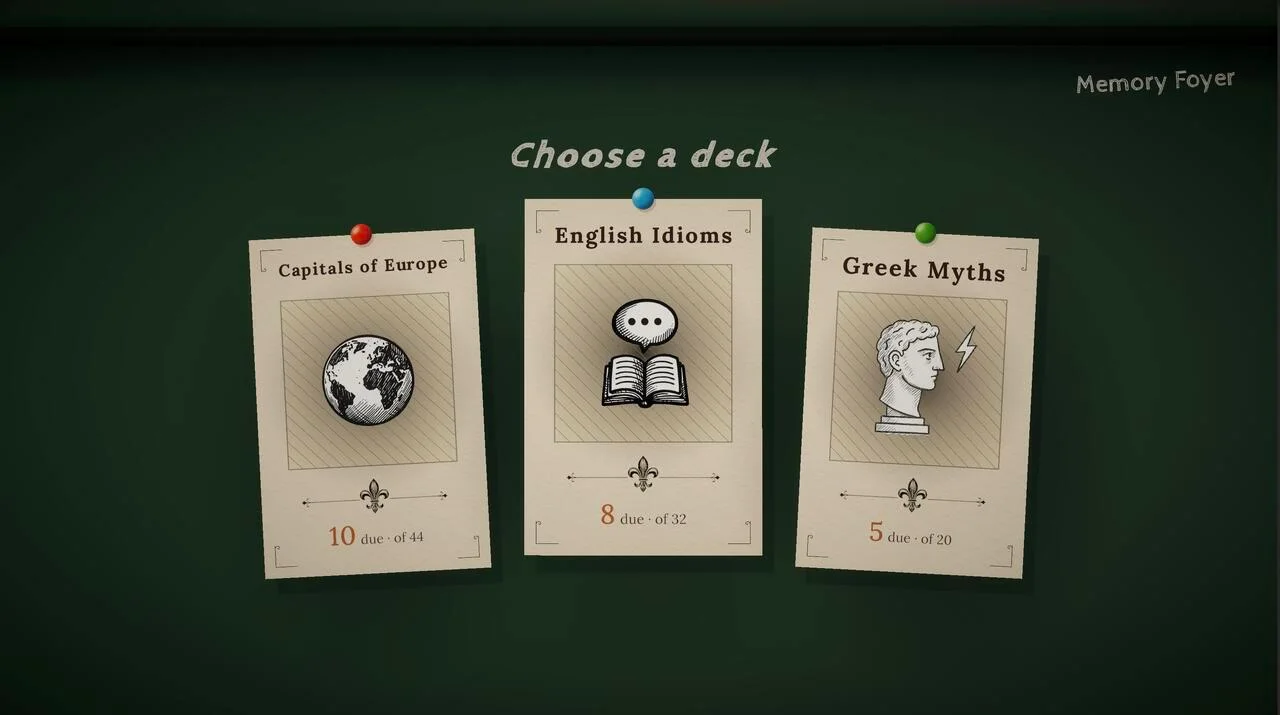
A spaced-repetition trainer with a small 3D foyer for picking a deck. The flashcard domain is deliberately plain — it is a vehicle for the two things a closed-source portfolio cannot show.
The hard part
Every commercial project I shipped lives in a private repository, so none of my code is readable by anyone deciding whether to hire me. A Unity-only portfolio also says nothing about the server side.
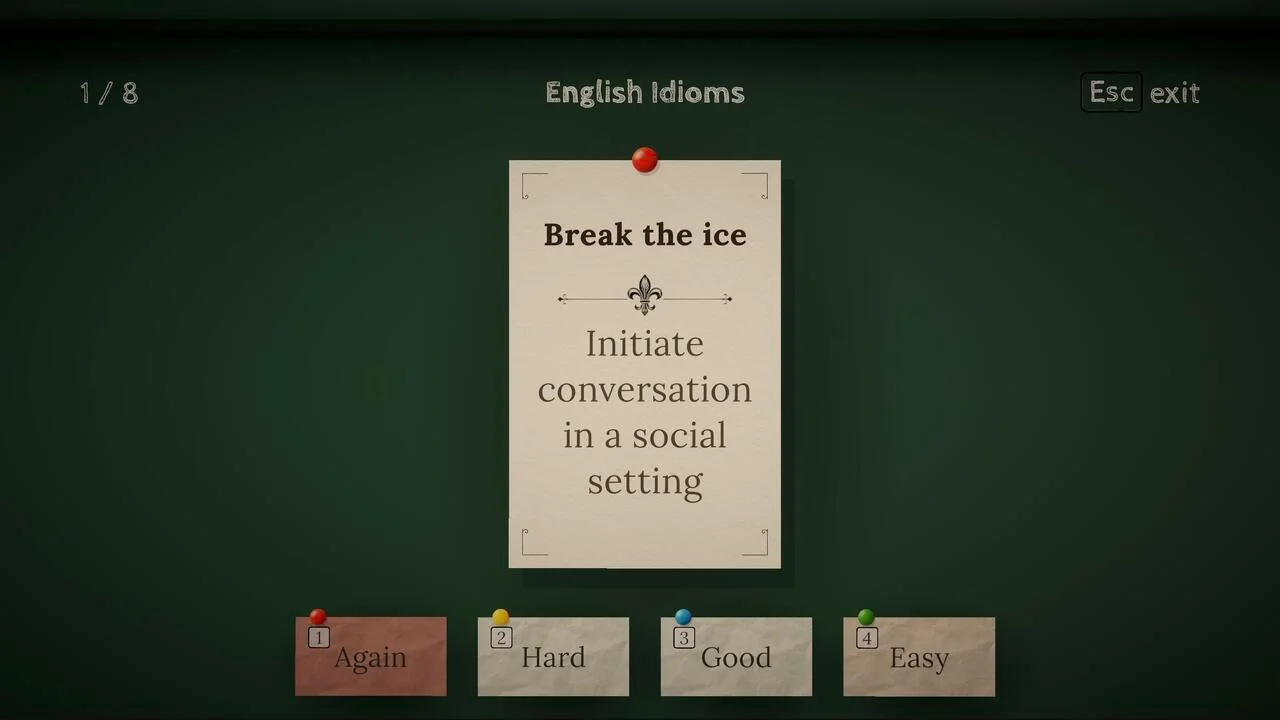
Split the project into five assembly-enforced layers. Domain and Application compile with no engine reference at all, so the scheduling algorithm and session orchestration build and unit-test as plain C#; time enters through an IClock interface.
Made the server authoritative: the SM-2 algorithm exists twice, once as pure C# and once as server JavaScript, each with its own test suite, and the server result overwrites the client cache after every submission.
Made submission idempotent — de-duplicated on session id plus a payload hash, with request validation on every endpoint.
Wrote an offline path that degrades instead of failing: HTTP is primary, an atomic JSON cache is the fallback, and queued sessions drain in order once the connection returns.
Built a Deck Author window in UI Toolkit so deck content stays one diffable file instead of scattered assets.
Covered every layer with tests: twelve edit-mode suites on the client, plus algorithm and HTTP integration suites on the server.
A project that can be read, run and tested by a stranger — and a written list of its own limits, from last-write-wins across devices to the write-ahead log that a production version would need.
Worth calling out
I built this one end to end. These are the parts worth naming.
- The architecture
- Five layers with dependencies pointing inward, enforced by assembly definitions rather than by convention.
- Domain and Application kept free of UnityEngine so the core is testable without the editor.
- Dependency injection, async and in-process messaging wired through VContainer, UniTask and MessagePipe.
- The server
- Five endpoints on Express and SQLite with schema-validated requests.
- Idempotent submission keyed on session id and payload hash.
- The scheduling algorithm reimplemented server-side as the source of truth.
- The honest part
- A trade-offs section that names what the project does not do and why, instead of hiding it.
More from the project
Project facts
- Year
- 2026
- Role
- Solo developer
- Scope
- Client, server, tooling and tests
- Engine
- Unity 6000.4.1f1, URP
- Backend
- Node, Express, SQLite
- License
- MIT
- Built
- 29 April to 20 May 2026 — about three weeks
- Scheduling
- A published spaced-repetition algorithm, reimplemented server-side as the source of truth
- Status
- Finished as a personal project — not a commercial-grade product
- Source
- github.com/devID767 ↗